
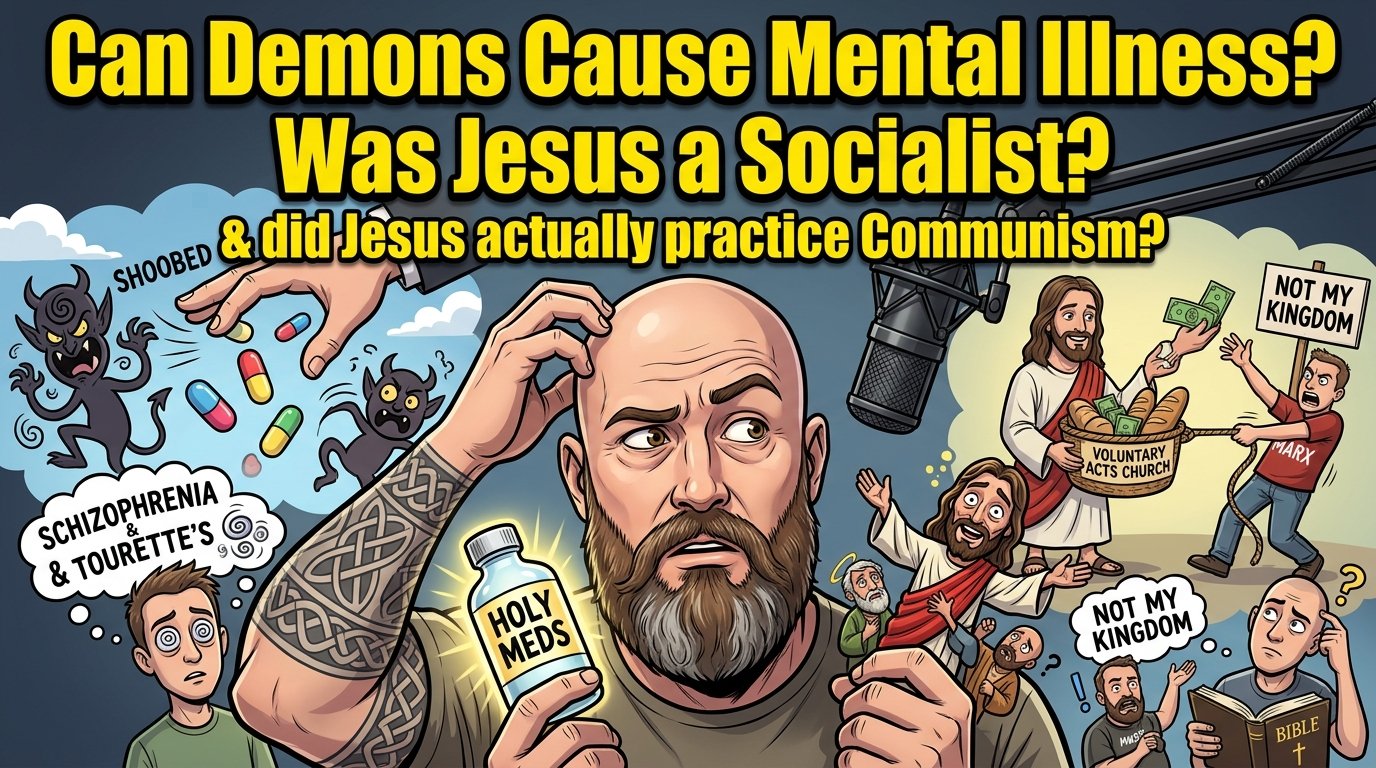
Nate faces the demons and mental illness question alongside the Jesus socialist debate
Can Demons Cause Mental Illness? & Was Jesus a Socialist?
What happens when a caller with schizophrenia asks why so many Christians blame demons for mental illness—and another wants to know if Jesus was Karl Marx in sandals? In this episode of the Ask A Christian Podcast, Nate takes on demons and mental illness with both biblical precision and pastoral compassion, then pivots to the question that refuses to die: was Jesus a socialist? Along the way, an atheist caller spends twenty minutes trying to dismantle the Gospels, a question about who God actually loves gets a surprisingly nuanced answer, and someone asks Nate what he thinks about Jews. Spoiler: he doesn’t get canceled.
Demons and Mental Illness: The Biblical Bottom Line
Nate fields a question from a listener with schizophrenia and Tourette’s who has been told by other Christians to quit their medication and pray harder. His answer is refreshingly sane: demons are real, spiritual warfare is real, but equating every mental health struggle with demonic possession is unbiblical and dangerous. The Bible never says all mental illness is demonic—it does say God gave humans the ability to create medicines, splints, and salves. The surgeon who credits God for a successful operation? That’s not a cop-out. That’s worship. For a fuller treatment of how Christians should think about faithful living, explore our Christian catechism for adults. And when Nate turns to politics, he makes the case that the Acts church model was voluntary, not coercive—Peter’s question to Ananias (“Wasn’t this money yours?”) settles it. For more on navigating controversial topics with grace, see our resources on graceful disagreement.
The Atheist, the 500 Witnesses, and the Harry Potter Fanfiction Argument
Cameron from somewhere in atheist YouTube land calls in with a rehearsed list of objections: Exodus didn’t happen, the global flood is myth, the Gospel writers just invented Jesus to fulfill prophecy, and the 500 witnesses in 1 Corinthians were never verified. Nate’s response is patient but pointed—if you demand absolute certainty before believing anything, you can’t get out of bed in the morning. He walks through Psalm 22 (pierced hands and feet before crucifixion was invented), Zechariah’s 30 pieces of silver, and Jeconiah’s curse (the legal-adoption solution is genuinely clever). The most memorable line: “If we can’t know anything just because they’re supernatural claims, let’s not pursue any history education.” The atheist leaves unconvinced. Nate leaves with his faith intact and his bald head intact.

Watch the Full Episode
Connect With Us
Share this post on:
 Share on Gab
 Share on Truth Social