
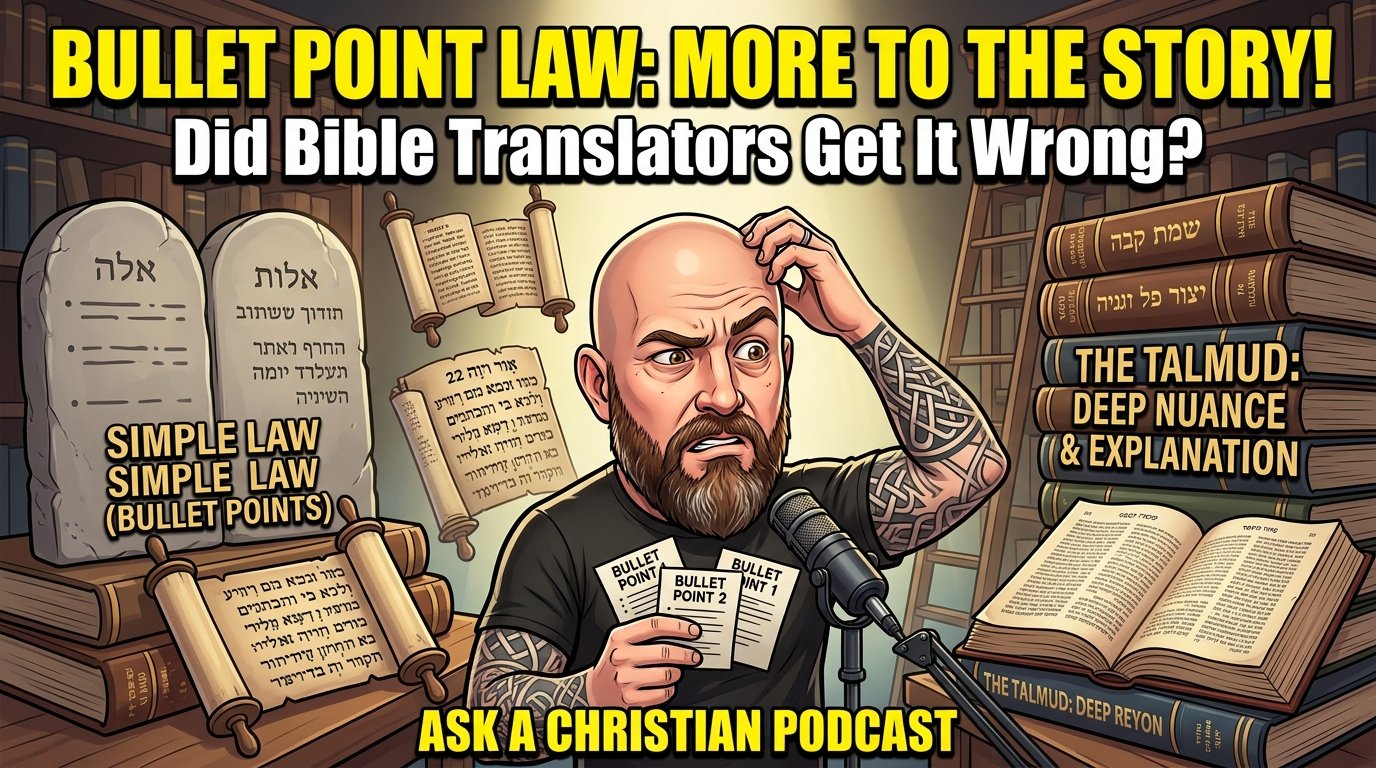
Nate examines God's law, Bible translations, Hebrew wording, and the deeper context behind controversial Old Testament passages.
Can Bible Translations Get It Wrong? God’s Law & Talmud
What happens when someone reads a few controversial verses from the Old Testament and decides they have the entire law of Moses figured out? On this episode, Nate tackles that approach head-on while exploring Bible translations, Hebrew wording, and the importance of reading difficult passages in their broader context. The discussion moves from Exodus 21 and slavery to Deuteronomy 22, where different English translations can make the wording look substantially different. Nate also argues that understanding how Jewish tradition interpreted and applied these laws requires more than pulling isolated verses out of Scripture. Along the way, an agnostic caller raises questions about belief, predestination, and whether people can be unable to believe in God. It is a wide-ranging conversation, but the recurring lesson is simple: read the whole thing before passing judgment.
Bible Translations and the Biblical Context
The episode’s central argument is that Bible translations should be evaluated by the meaning they communicate in context, not merely by comparing individual English words. Nate discusses Jesus’ statement about “hating” father and mother, explaining it alongside the biblical command to honor parents, and argues that the point is the supreme priority of devotion to God rather than literal hostility toward one’s parents. The discussion then turns to Deuteronomy 22, particularly the distinction between the cases involving a betrothed woman and an unbetrothed virgin. Nate examines the Hebrew wording behind translations such as “seizes,” “forces,” and “rapes,” while emphasizing that the surrounding verses matter. Read Deuteronomy 22 in context rather than building an argument around a single translated phrase. For a broader foundation on biblical doctrine, explore our statement of faith and core biblical beliefs.
Do Two Verses Explain an Entire Law?
The slavery discussion illustrates the episode’s larger concern. Nate reads Exodus 21 and points out that the biblical material dealing with slavery is much larger than a couple of bullet points. He then argues that the Talmud contains extensive discussions of how Jewish law was understood and applied, particularly concerning the difficult passages in Deuteronomy 22. Whether listeners ultimately agree with his conclusions about the Talmud, the challenge is clear: complicated legal systems cannot responsibly be reduced to one sentence pulled from a much larger body of material. The same principle appears throughout the conversation. The callers debate spiritual Israel, predestination, creation, the firmament, and even whether God is literally a bird in Psalm 91. Apparently, “read the context” is useful advice for almost everything.

Go deeper into biblical questions with Nate’s apologetics book for Christians, skeptics, and anyone wrestling with difficult faith questions.
Watch the Full Episode
Connect With Us
Share this post on:
 Share on Gab
.svg) Share on Truth Social
Share on Truth Social