
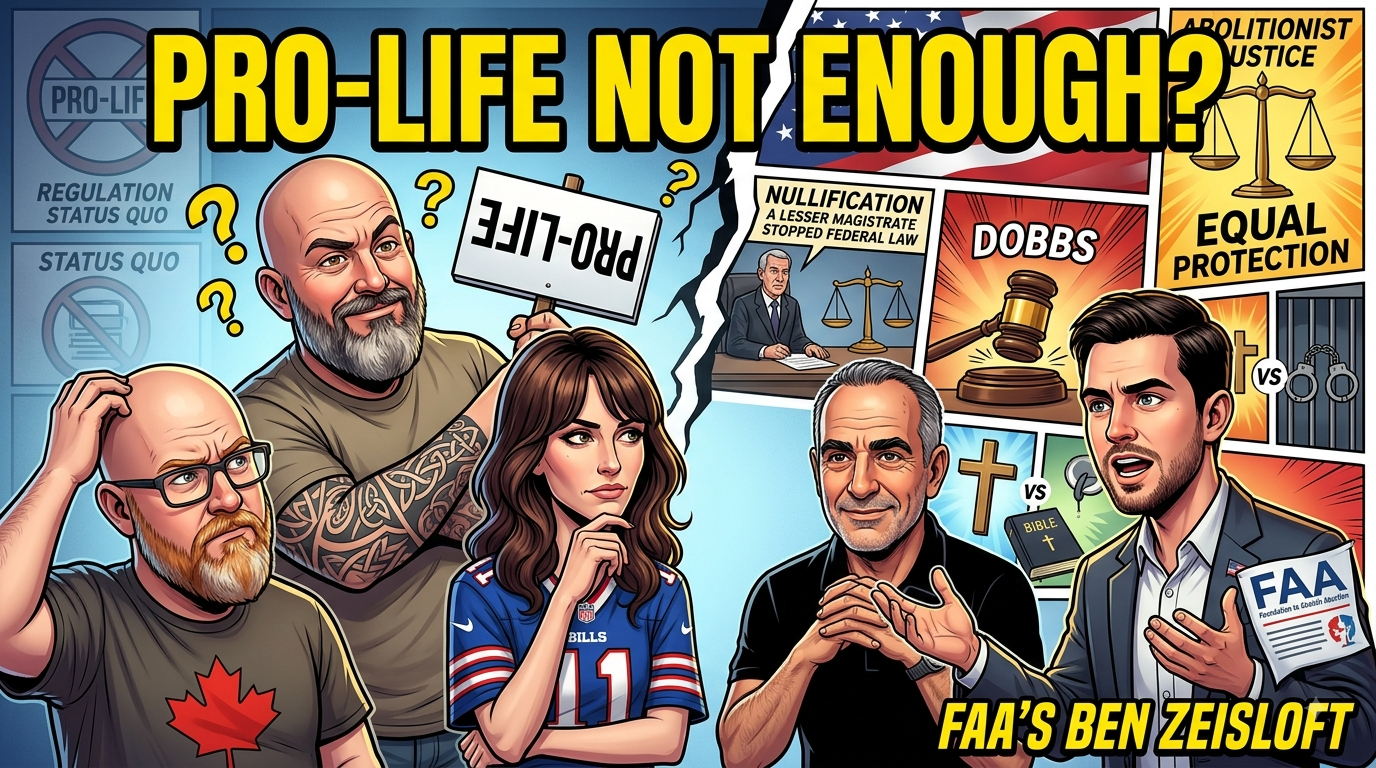
Ben Zeisloft joins Nate for a challenging discussion about abortion abolition, equal protection, criminalization, and Christian responsibility.
Is Pro-Life Not Pro-Life Enough? Ben Zeisloft | Foundation to Abolish Abortion
Is being pro-life enough if abortion is actually the unjust taking of innocent human life? That is the uncomfortable question Nate puts to Ben Zeisloft of the Foundation to Abolish Abortion. The conversation goes well beyond the familiar “pro-life versus pro-choice” debate and gets into a much sharper disagreement among Christians themselves: should abortion simply be restricted, or should unborn children receive the same legal protection as everyone else? Ben explains the abolitionist case for equal protection, while Nate and Steph press him on criminalization, cultural change, miscarriage, ectopic pregnancy, and what happens when people have been taught for generations that abortion is acceptable. Then Michael the Canadian atheist joins the discussion, and the conversation turns toward the deeper question underneath all of it: Why should human life have this kind of value in the first place?
Abortion Abolition: The Biblical Bottom Line
Ben argues that the fundamental difference between the pro-life establishment and abortion abolitionists is not whether abortion is wrong, but what should logically follow from that conviction. If unborn children are human beings made in God’s image, the abolitionist position says the laws protecting born people should protect pre-born people as well. That means moving beyond regulations and applying murder laws equally. The discussion also addresses the difficult question of criminalization, including fathers and other participants in an abortion. Ben emphasizes that the goal is deterrence, not delight in punishment, and that past abortions would not be prosecuted retroactively.
The conversation also makes room for difficult medical situations. Ben explains that the proposed legislation distinguishes miscarriage from criminal abortion and allows reasonable medical steps to save a mother’s life, including situations involving ectopic pregnancy. The point, as he describes it, is medical triage rather than deliberately targeting an innocent child. The discussion repeatedly returns to the Christian conviction that law is not merely a political tool but can restrain evil and teach a culture what is right.
For more on the biblical foundations behind Christian belief, explore our Statement of Faith. You can also dig deeper into biblical instruction through our Christian Catechism for Adults.
When Microsoft Word Meets the Bible
At one point the conversation turns to Ben’s organization’s use of Scripture in legal advocacy. Bradley Pierce reportedly cited Bible verses in a legal brief and apparently had to tinker with Microsoft Word’s citation system to make it cooperate. Nate immediately imagined the old Microsoft paperclip appearing to ask, “Are you sure you want to cite the Bible here?” It is a small moment, but it captures a major theme of the interview: Ben’s organization is not trying to hide the Christian foundation of its position. The Bible is not an embarrassing footnote to the argument; it is the starting point.
And then Michael arrives, because apparently a discussion about abortion, theology, law, and human dignity was not complicated enough. The Canadian atheist challenges Ben on whether this is ultimately just theology, while Ben turns the question around: if human beings are merely material organisms, what grounds the moral obligation to care so deeply about the unborn? That exchange pushes the conversation from legislation into worldview and apologetics.

Equip yourself for difficult conversations—Nate’s book offers biblical clarity and practical tools for defending the faith.
Watch the Full Episode
Connect With Us
Share this post on:
 Share on Gab
.svg) Share on Truth Social
Share on Truth Social