
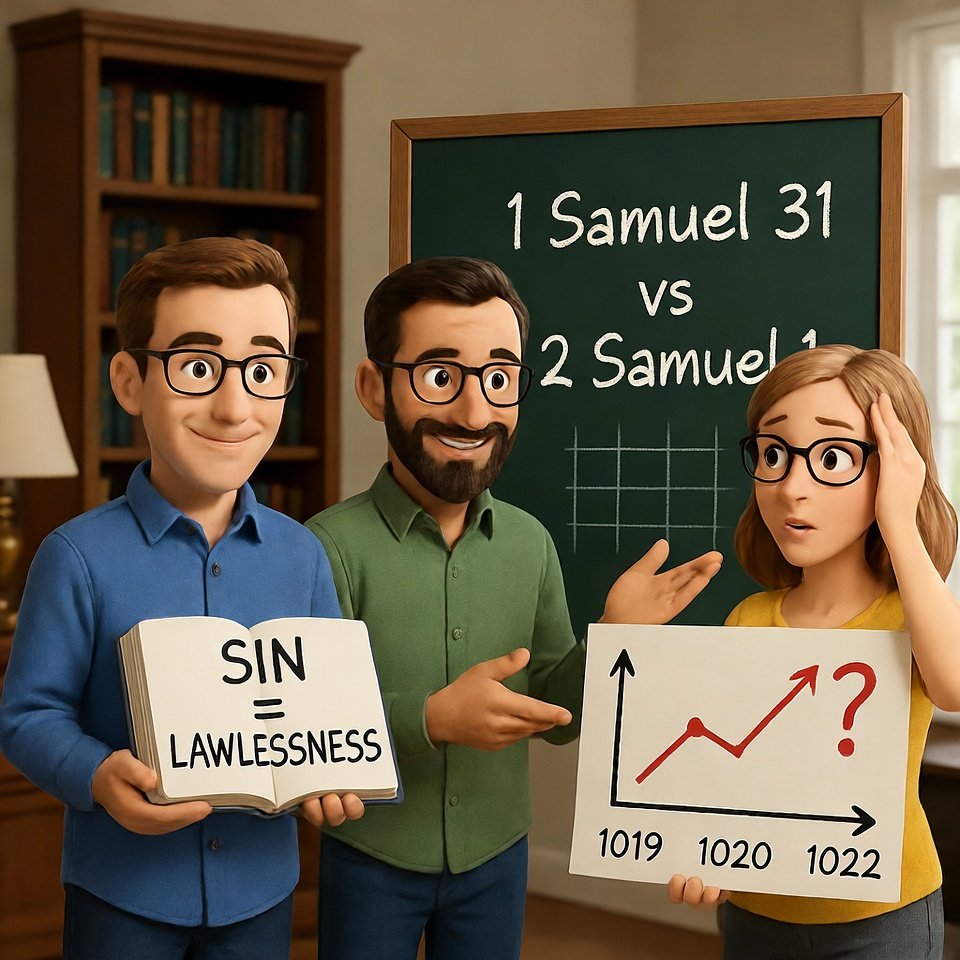
Nate tackles what sin is, divine command theory, and biblical contradictions with theological precision
What Is Sin? Divine Command Theory, Saul’s Death & Old Testament Contradictions
What happens when the most-searched Christian question on the internet collides with ancient Hebrew manuscripts, a lying Amalekite, and multiple AI-generated intro songs that sound like rejected Simple Plan demos? Nate and the Ask A Christian team explore what is sin, wrestle with divine command theory, and solve an apparent Old Testament contradiction involving King Saul’s death. Between sips of coffee and regrettable musical choices, they deliver biblical clarity on law, grace, and why you should probably read 1 Samuel 31 before believing everything an Amalekite tells you.
What Is Sin: The Biblical Bottom Line
Chris delivers the clearest three-minute answer you will hear: what is sin? Sin is lawlessness—a breaking of God’s law as outlined in Scripture. First John defines it plainly. God’s law reflects His holy character, so transgression against that law is transgression against God Himself. The wages of sin is death, which is why the Old Testament sacrificial system existed as a shadow pointing to Christ’s ultimate payment. Everyone has sinned. Everyone needs forgiveness. No amount of ritual, education, or good intentions closes that gap. Only Jesus does. Romans 10:9-10 makes salvation beautifully simple: believe in your heart that God raised Jesus from the dead, confess with your mouth that Jesus is Lord, and you will be saved. That is the Gospel. No seminary required.
Understanding what is sin also clarifies why moral law matters. For those wrestling with tough theological questions, the Theology Unpacked category offers deeper dives into Scripture’s most challenging passages.
Divine Command Theory and the Amalekite Problem
James pressed Nate and Chris on whether Christianity embraces divine command theory—the idea that something is morally right simply because God commands it. Chris clarified that Christianity does not hold to arbitrary divine commands. God’s decrees flow from His unchanging character and nature, not random whims. When God judges the Amalekites or permits Israel to go to war, it is not a capricious flip of moral standards. It is God exercising His role as the only righteous Judge, working within primary and secondary causes. Humans act with free will (secondary cause), yet God ordains all things (primary cause). The Westminster Confession addresses this tension directly: God is not the author of sin, nor does He violate the will of creatures. For those wanting to explore the balance between God’s sovereignty and human responsibility, Romans 9 remains essential reading.
Did Saul Die by Suicide or Amalekite Assassination?
Steph brought a legitimate textual puzzle to the table: 1 Samuel 31 says Saul fell on his own sword after being wounded by Philistine archers, while 2 Samuel 1 features an Amalekite claiming he delivered the killing blow at Saul’s request. Three explanations emerged. First, the Amalekite lied to curry favor with David, hoping for a reward—David saw through it and executed him for his own testimony. Second, Saul’s suicide attempt failed, and the Amalekite finished the job as a mercy killing. Third, the narrative emphasizes lying as a major literary theme across 1 and 2 Samuel, reinforced by the parallel story in 2 Samuel 4 where assassins lie about killing Ish-bosheth. The Hebrew word gare (sojourner or convert) adds textual nuance. Rabbinical sources lean toward the first explanation. Either way, no contradiction exists—just three plausible readings grounded in the text.

Answer the skeptics fearlessly—Nate’s book arms you with biblical clarity for every hard question.
Watch the Full Episode
Connect With Us
Share this post on:
 Share on Gab
.svg) Share on Truth Social
Share on Truth Social