
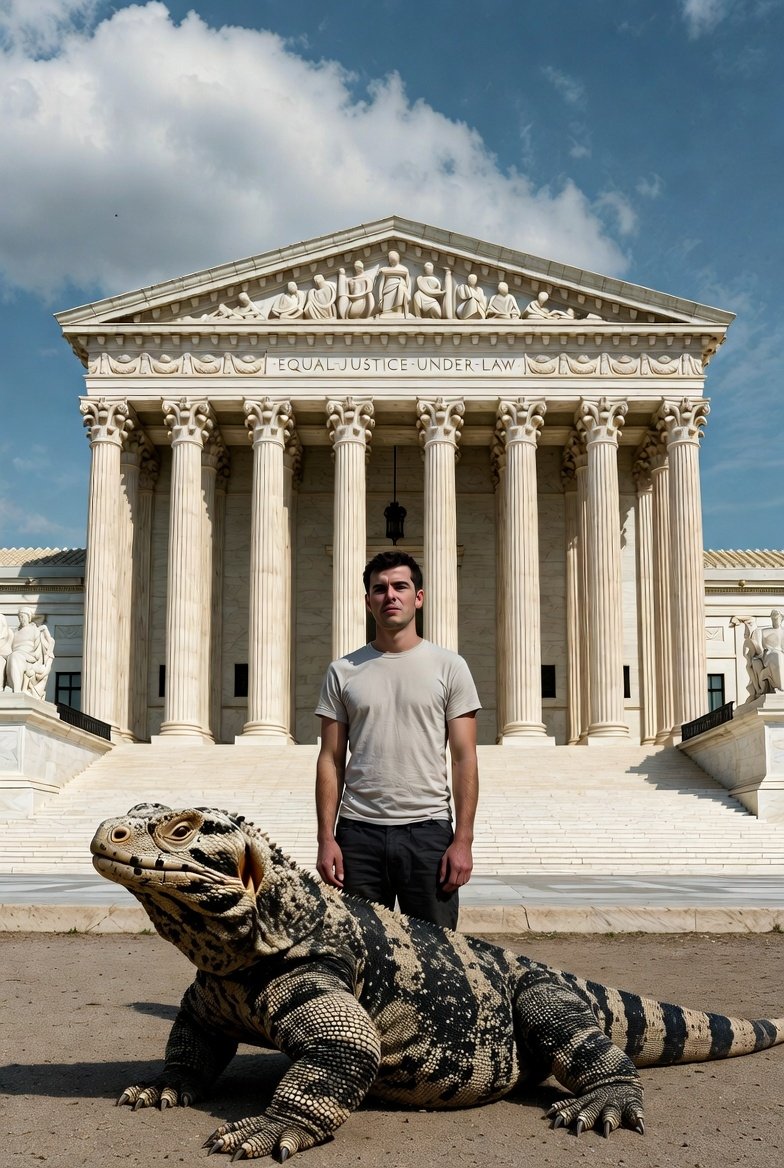
Nate debates the constitutional crisis of tariffs and the crisis of Gila Monster venom.
Trump Tariffs Supreme Court Case: Gila Monster Venom & An OCD Loop
The Supreme Court is hearing arguments on tariffs, and Nate is… not pleased. This episode dives headfirst into the Trump tariffs Supreme Court case, exploring the arguments that have Nate “rage induced”. Is a tariff a tax? Is Justice Roberts playing word games? And did Amy Coney Barrett really mistake Richard Nixon for Abraham Lincoln? We explore the constitutional questions and the economic fallout. But the political spice does not end there. Trump also held a press conference on weight loss drugs where a guest fainted, which naturally leads to a discussion on Gila Monster venom.
Trump Tariffs Supreme Court Case: The Constitutional Debate
The core issue with the Trump tariffs Supreme Court case is a question of constitutional authority. Opponents, including some Justices, argue that a tariff functions as a tax, and only Congress has the power to tax. Nate counters that the law explicitly differentiates them and that presidents, from Nixon to Obama, have used these powers before. The debate explores whether this is a legitimate “America First” policy to protect national manufacturing or a reckless move risking a trade war, like the historical Smoot-Hawley Act.
While the hosts debate economics, the conversation highlights a biblical paradigm: the Pharisees vs. the clear readers. Are the Justices (like the Pharisees) obfuscating what is plain text? Or is the Trump tariffs Supreme Court debate a necessary check on executive power? The implications are massive, potentially costing over a trillion dollars. For more on political engagement from a Christian view, explore our Politics & Faith category.
Diagnosis: Nate’s “OCD Loop”
After Nate’s extended, multi-threaded breakdown of the Trump tariffs Supreme Court case, Steph offers a startlingly specific diagnosis: he is “stuck in an OCD loop”. The comparison becomes even more vivid when she equates his debate style to her son, who methodically announces his “hit list” of classmates he intends to bop. Chris, a former mental health professional, weighs in, suggesting everyone is a little neurotic. The segment is a perfect derailment, proving that even when discussing constitutional law, the podcast’s main subject is often the hosts themselves.

Answer the tough questions—Nate’s book gives you scriptural clarity for a chaotic world.
Watch the Full Episode
Connect With Us
Share this post on:
 Share on Gab
.svg) Share on Truth Social
Share on Truth Social